
Building wealth beyond a primary income also means deciding where to put money, questioning the assumptions behind an opportunity, and reviewing what happened after the investment. Investment clubs can create simple systems to do this with strategies such as standardized deal memos and structured post-mortems. Here's how.
Use a Structured Agenda for Investment Meetings
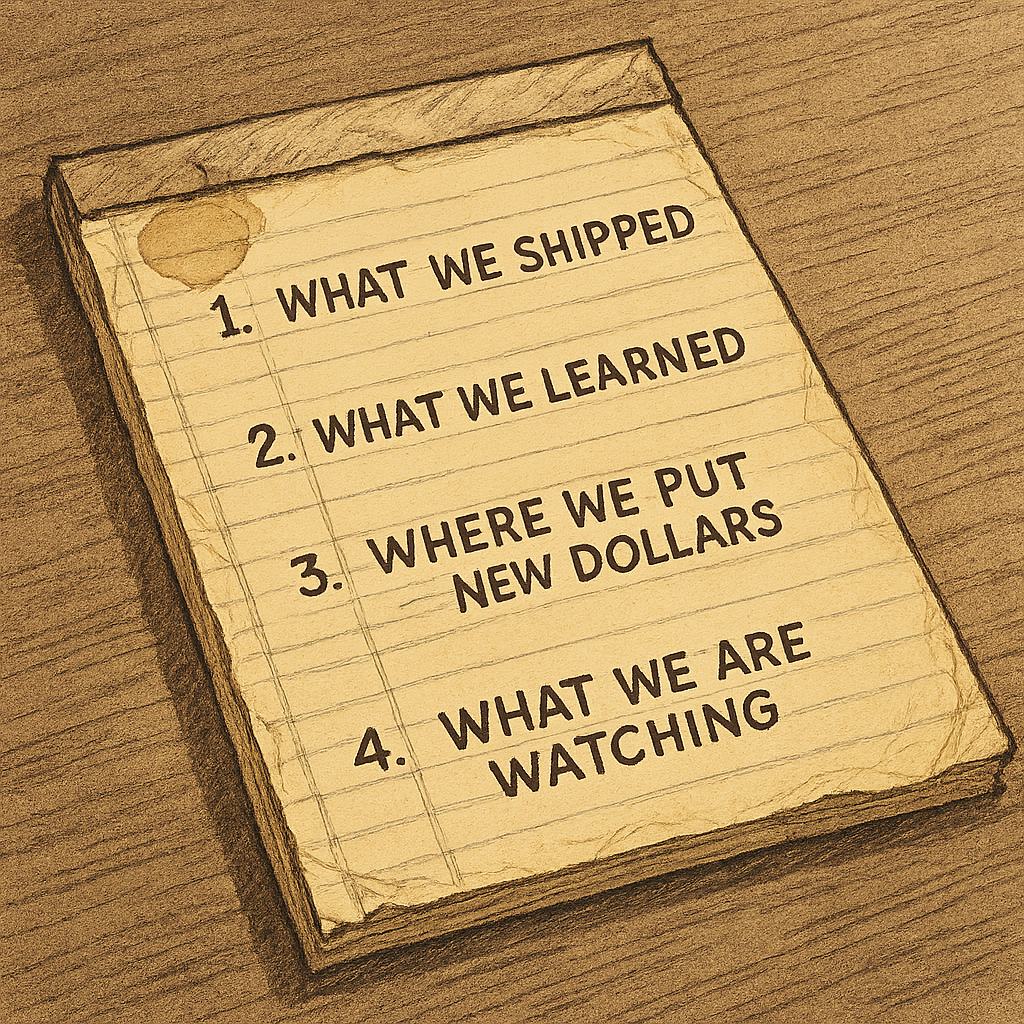
A structured meeting agenda can keep investment discussions focused and consistent. Our club uses a four-part agenda each month: what was completed since the previous meeting, what was learned, where new capital was invested, and what opportunities or risks members are watching. Keeping the same structure each month makes it easier to compare decisions, question new proposals, and prevent a persuasive pitch from taking over the discussion.
The first ten minutes are used to review key performance figures. Each member reports cash yield, total return, and one operational metric relevant to their current project, such as occupancy for a multifamily property, customer churn for a software business, or royalties from a catalog. Reviewing these figures before discussing new opportunities gives the group a consistent basis for evaluating new proposals.
The meeting follows a set speaking order: the person presenting the investment, a member assigned to challenge the proposal, the member responsible for assessing how much capital to commit, and then the rest of the group. The member assigned to challenge the proposal must ask two questions before other members evaluate the idea. The person assessing the allocation then answers a key question: "If this investment went wrong, what would fail first?" This process helps the group identify weaknesses that may not be obvious in a presentation, such as dependence on a single key person, the loss of a major tenant, or the assumption that an interest-only loan can be refinanced successfully.
Require a One-Page Investment Memo
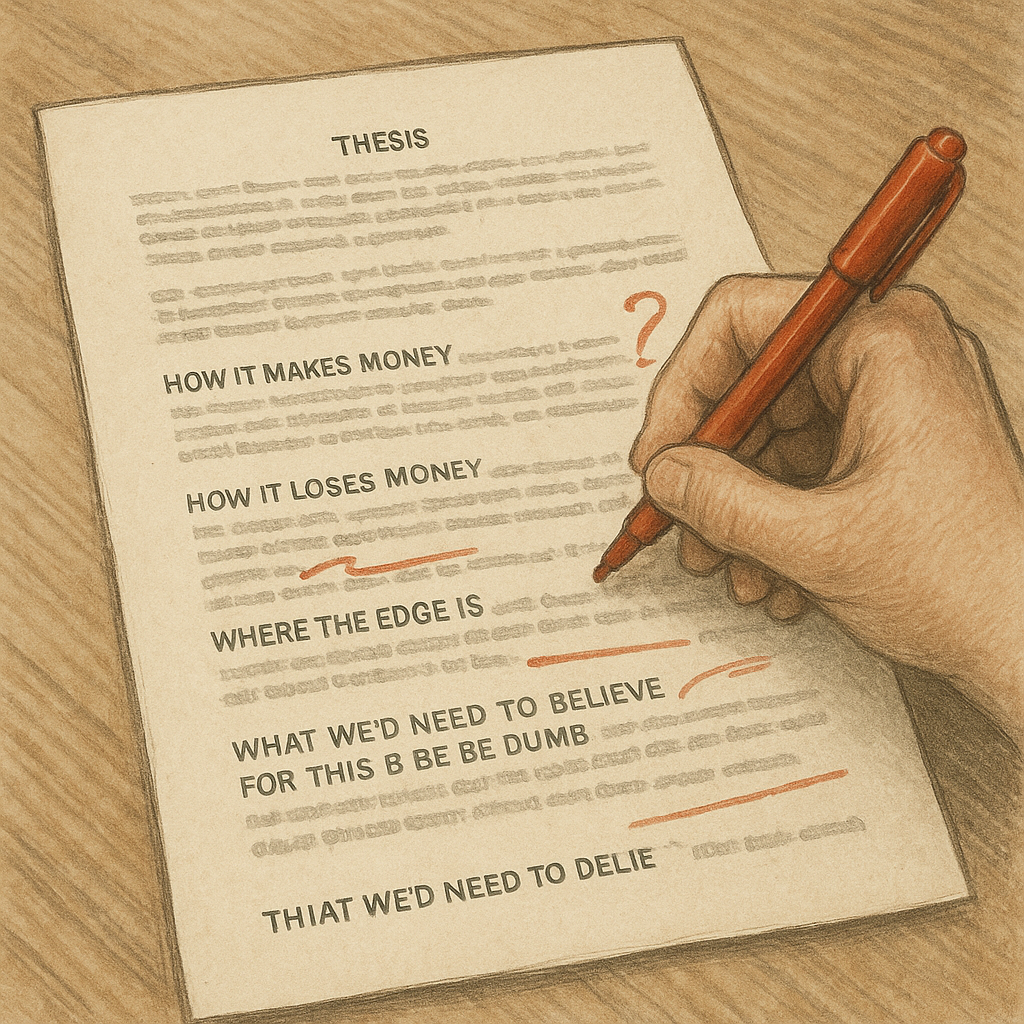
We used to let people show up with slides, and whoever had the prettiest deck got the most oxygen. Eventually, we stopped using decks. Now every proposal comes in as a one-page memo, printed in the room. There are no exceptions, and appendices are not allowed. If someone needs more detail, they can provide it when the group asks for it.
The memo has fixed headings: thesis, how it makes money, how it loses money, where the edge is, and what we'd need to believe for this to be dumb. That last one forces the presenter to write the bear case in their own words. It also forces the room to argue about assumptions.
Once all that's out of the way, we take out our red pens and mark the memo in silence for a few minutes. You can circle a line, write a question in the margin, put a star next to a number you want sourced, or draw a big, ugly question mark next to a claim. The silence plays an important role in keeping the highest-status person from steering the group before everyone has read the same words.
There's a culture piece, too. A memo is harder to fake than enthusiasm. You can't hide behind a charismatic delivery when the page is sitting there with your assumptions exposed. The process gives everyone time to review the proposal before the discussion begins.
Review Investment Decisions After the Outcome
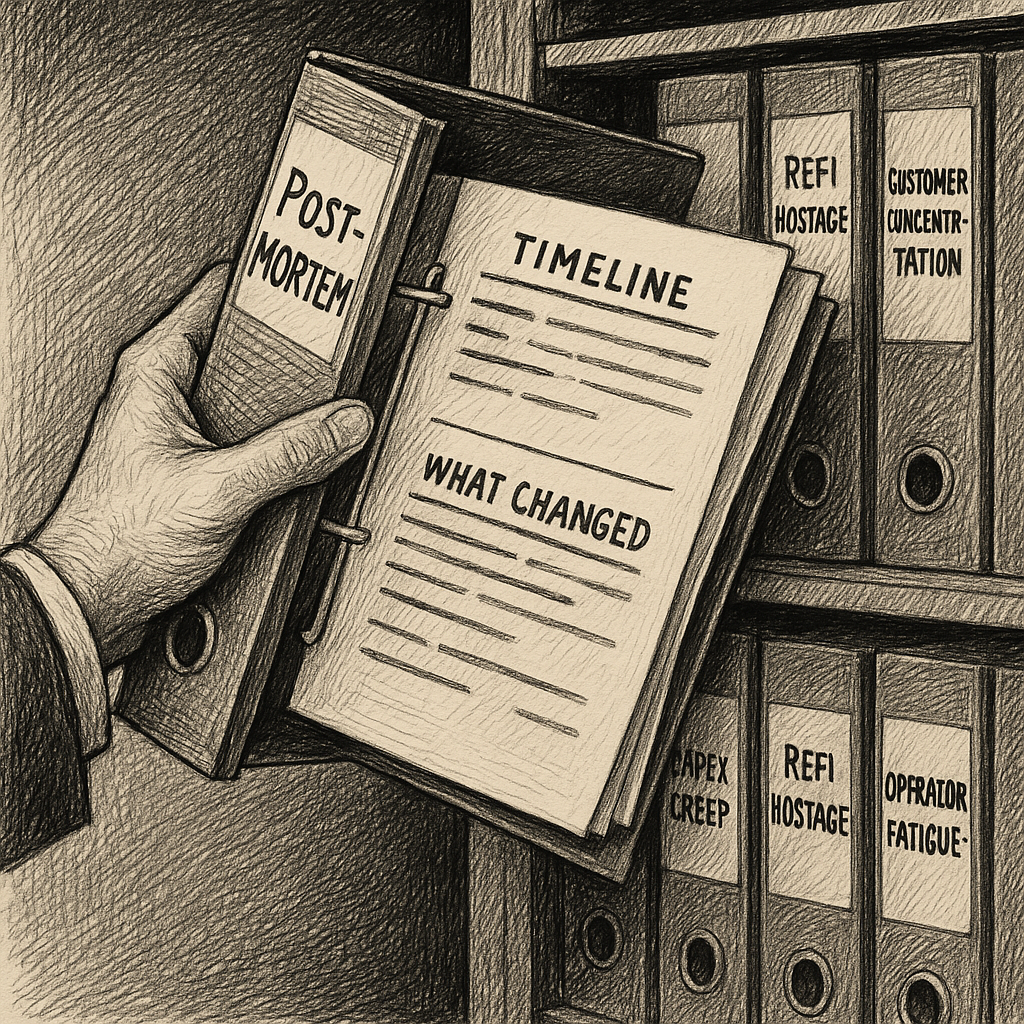
Once a quarter, we hold a post-mortem review in which members examine what happened after an investment was made. It is not optional, even when returns are good. Especially when returns are good, because that's when you start confusing luck with skill, and you begin to loosen standards.
Each member brings one deal that surprised them, positive or negative, and a printed timeline that includes the date we committed, date capital called, dates of the first three signals something was off (or unusually strong), and what we did in response. We attach the original one-page memo to the front, then add a second page titled "What changed." This is where you record unexpected changes, such as a sponsor's reporting cadence failing to improve, DSCR falling below a target, or a key hire leaving.
The goal is to identify patterns that can inform future investment decisions. The binders are labeled and, over time, recurring problems such as rising costs, refinancing risk, or customer concentration become categories that members can refer to when evaluating new investments.